Last week, I wrote about challenge in games, how games that are too easy feel awfully flavorless, and how hard it is to get it right for a range of players with a range of skill levels. Actually, it's beyond hard--it's impossible. Some people will always find your game too easy, and some will find it too hard.
Having accepted that, the best we can do is to try to mitigate the frustration felt by players who don't start out with amazing skills. Challenge is one thing, but frustration, while it might be inevitable and not even totally undesirable at times... well, a little goes a long way. So here are a few thoughts about keeping the challenge satisfying while also keeping players from throwing their phone/laptop/controller out the window.
Having accepted that, the best we can do is to try to mitigate the frustration felt by players who don't start out with amazing skills. Challenge is one thing, but frustration, while it might be inevitable and not even totally undesirable at times... well, a little goes a long way. So here are a few thoughts about keeping the challenge satisfying while also keeping players from throwing their phone/laptop/controller out the window.
FML
1. Lower the stakes.
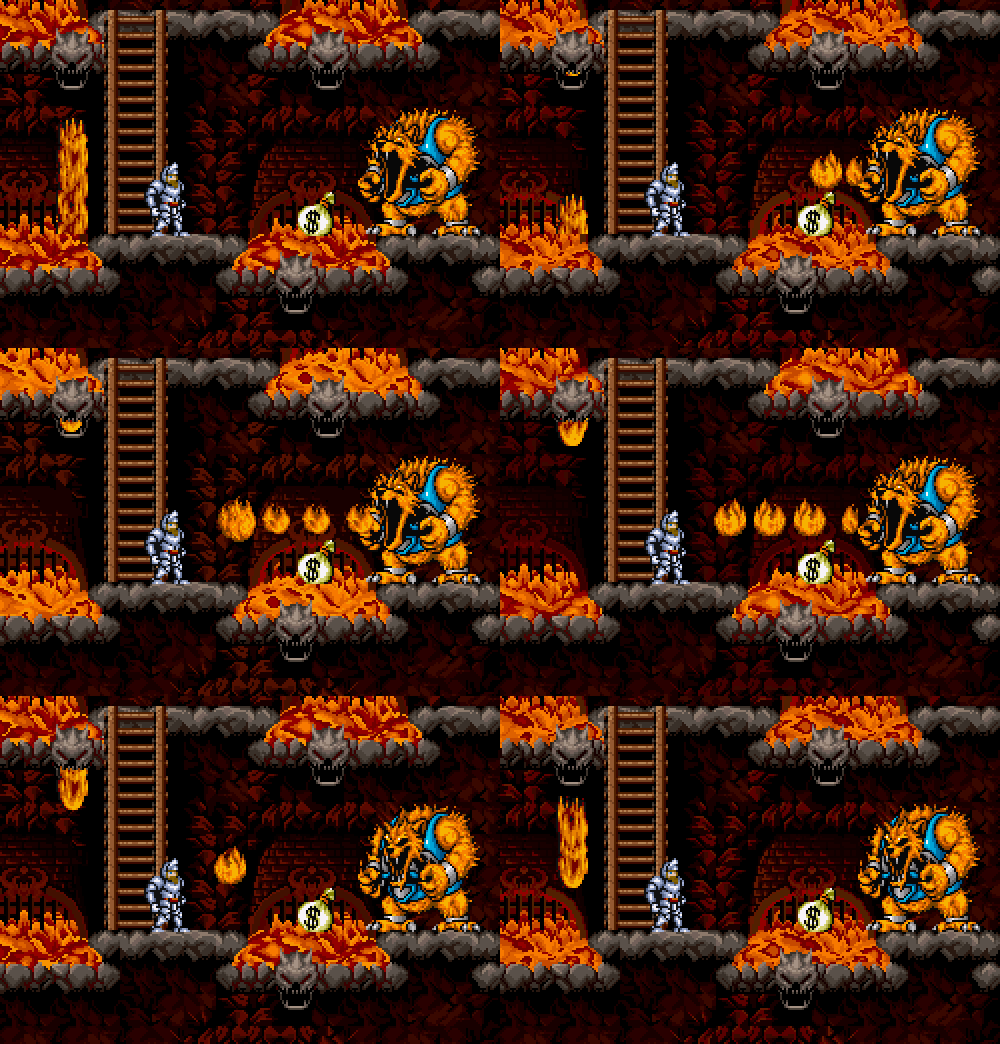
One thing that annoyed me as a self-identified hard-ass old-school gamer in the '90s was that people (the damn kids, mostly) would complain about dying in games. Having beefed it probably thousands of times in the course of beating Super Ghouls 'N Ghosts, I found that a tough position to sympathize with. I mean, one of the central principles of a video game is that you're stepping into a virtual space--where better to take risks you wouldn't take in real life? Unlike in your day-to-day existence, experimentation is almost completely untrammeled by consequence--what a gift! It's not like when you die in Super Ghouls 'N Ghosts, Tokuro Fujiwara appears in your living room and pees on the floor. (Though after a while, you may feel that he has.) What does dying in a game really cost you?
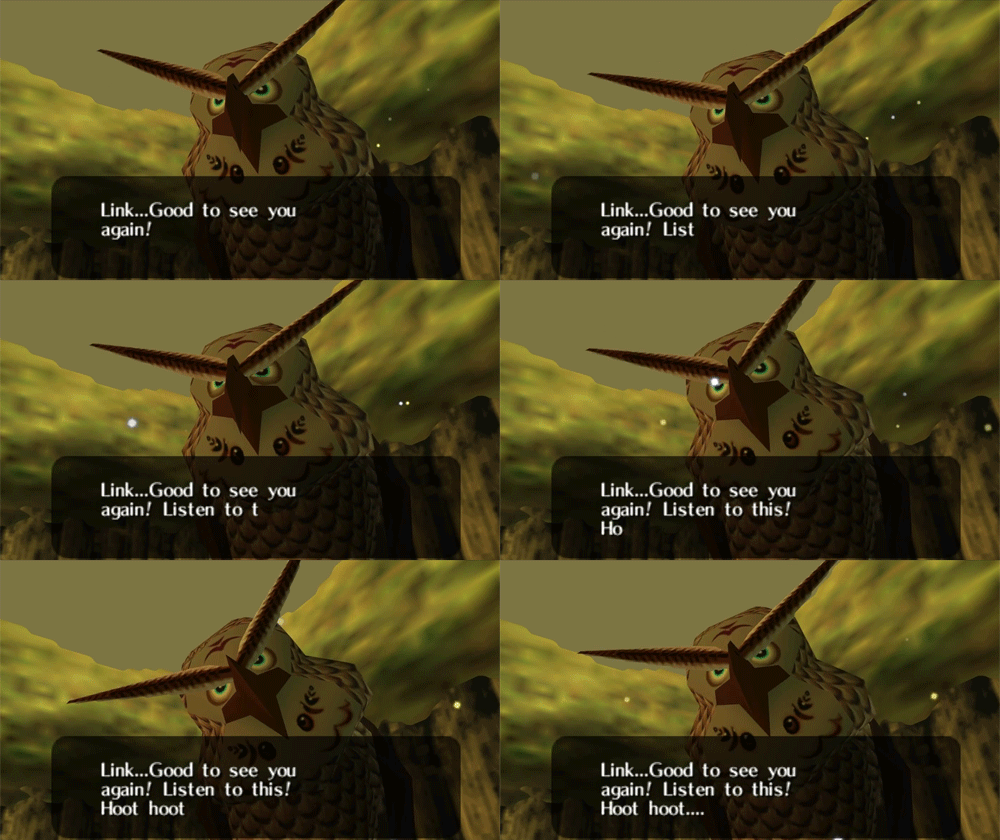
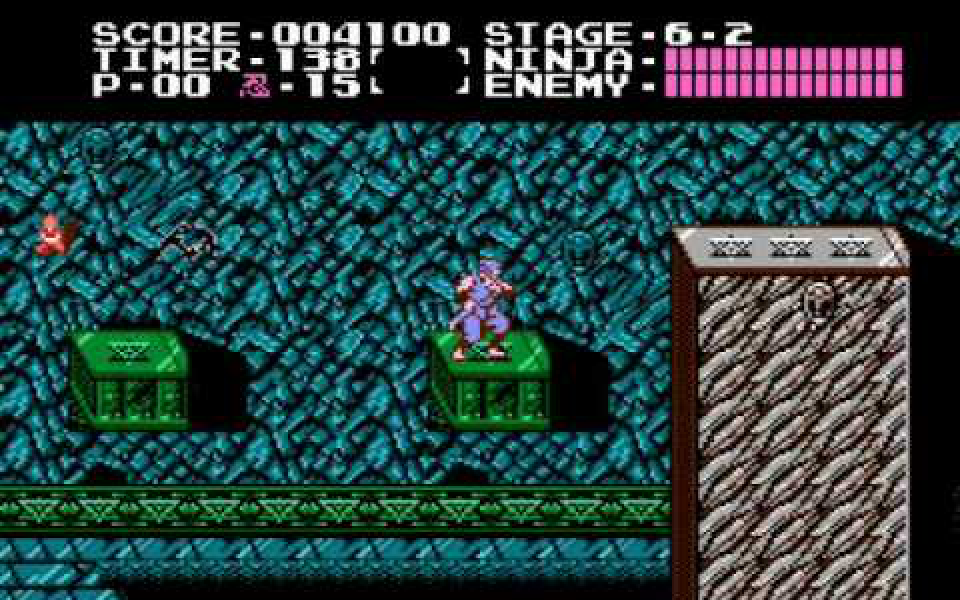
But to be fair to the soft-bellied youth of the '90s, by the period that they were starting to complain about it, dying in games really did cost you something: time. Did it ever. Whereas taking an eagle to the face in Ninja Gaiden usually meant a matter of seconds--minutes at most--to get back to where you were, dying in The Legend of Zelda: Ocarina of Time could mean an hour of listening to a filibustering owl, lectures from a fairy, and grand, game-interrupting announcements that you'd managed to secure another key. Perhaps because it's so annoying to die in OoT, the game is also too easy; the designers had to cap the challenge because failure was so frustrating.
One thing that annoyed me as a self-identified hard-ass old-school gamer in the '90s was that people (the damn kids, mostly) would complain about dying in games. Having beefed it probably thousands of times in the course of beating Super Ghouls 'N Ghosts, I found that a tough position to sympathize with. I mean, one of the central principles of a video game is that you're stepping into a virtual space--where better to take risks you wouldn't take in real life? Unlike in your day-to-day existence, experimentation is almost completely untrammeled by consequence--what a gift! It's not like when you die in Super Ghouls 'N Ghosts, Tokuro Fujiwara appears in your living room and pees on the floor. (Though after a while, you may feel that he has.) What does dying in a game really cost you?
But to be fair to the soft-bellied youth of the '90s, by the period that they were starting to complain about it, dying in games really did cost you something: time. Did it ever. Whereas taking an eagle to the face in Ninja Gaiden usually meant a matter of seconds--minutes at most--to get back to where you were, dying in The Legend of Zelda: Ocarina of Time could mean an hour of listening to a filibustering owl, lectures from a fairy, and grand, game-interrupting announcements that you'd managed to secure another key. Perhaps because it's so annoying to die in OoT, the game is also too easy; the designers had to cap the challenge because failure was so frustrating.
The feeling is far from mutual, pal.
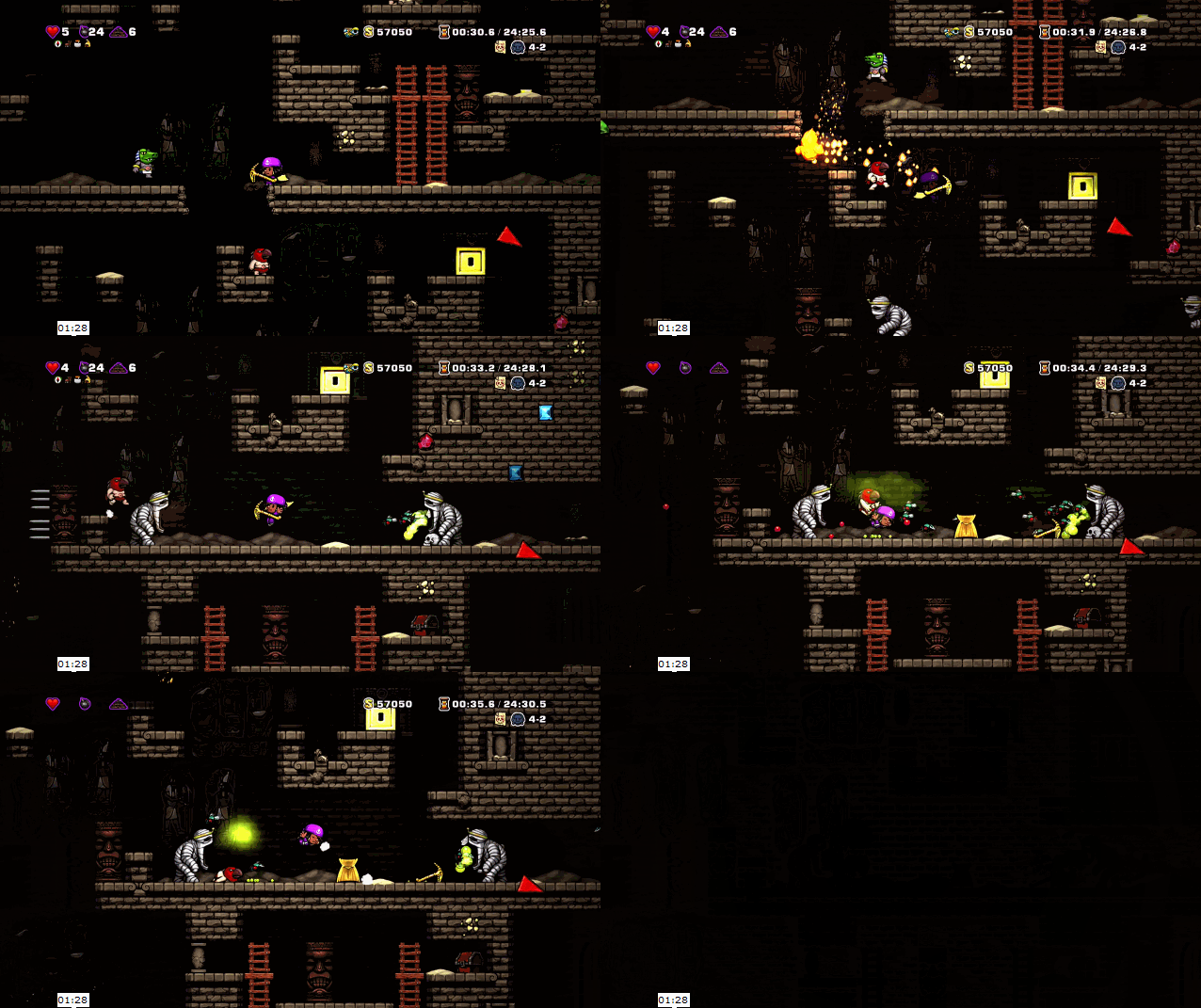
To me, there's a clear solution: lower the stakes. Failure is a crucial part of success; without it, success is unearned and unsatisfying. So don't make like Ocarina and make failure itself almost impossible. Make failure low-cost. Restarting should be fast, and levels should be short. When you die, it should take you milliseconds to get back into the action; otherwise, you're taken out of the flow every time, and that really does cost you. Luckily, modern indie games like Spelunky and Super Meat Boy have this thoroughly figured out; they're hard as hell, but dying just makes you want to try again. (During development, Satellina had six levels per "suite"; your goal was to clear them in less than three minutes. That was fine, but when I cut it down to five levels in 2:30, it instantly felt better.)
It couldn't be helped
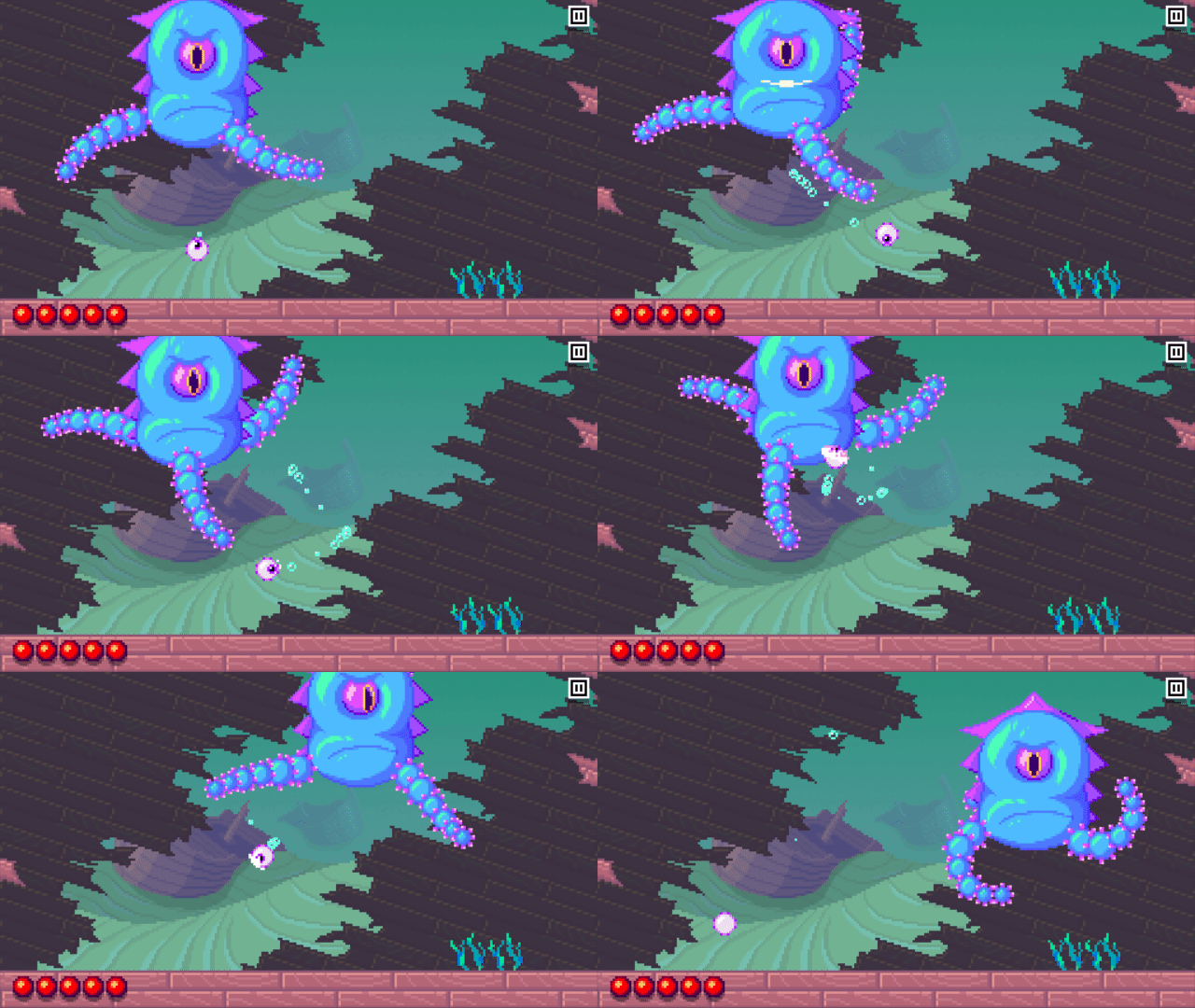
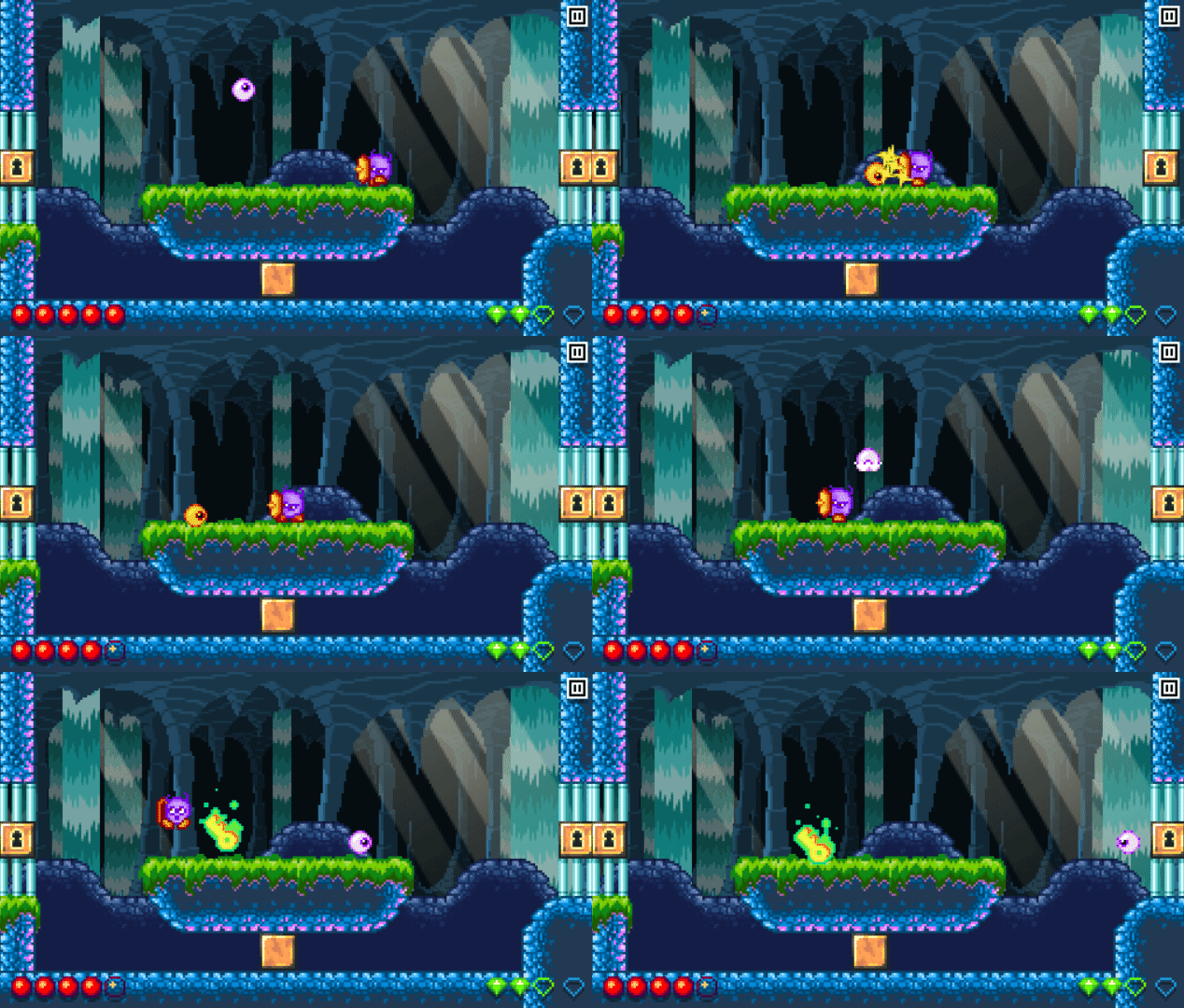
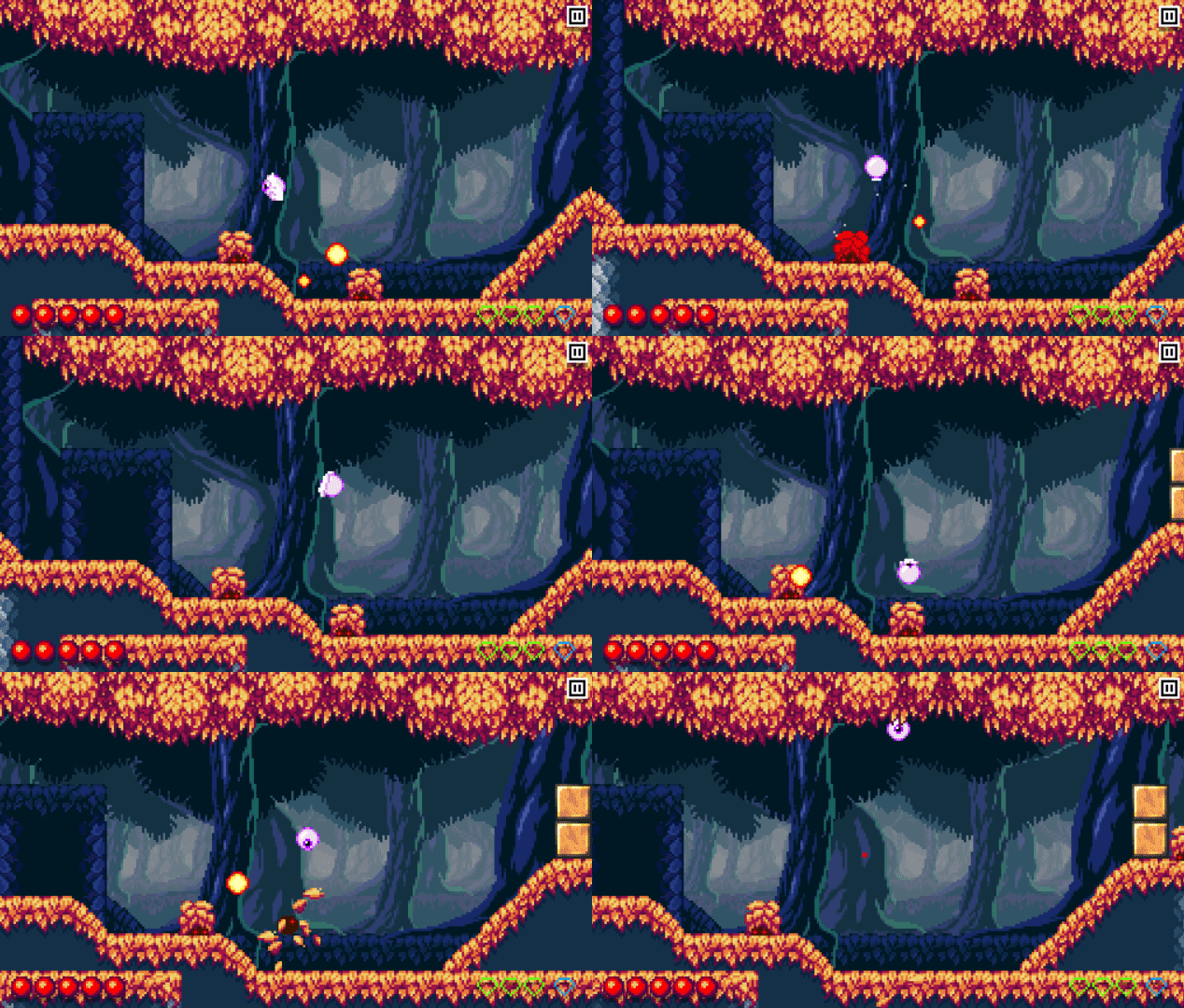
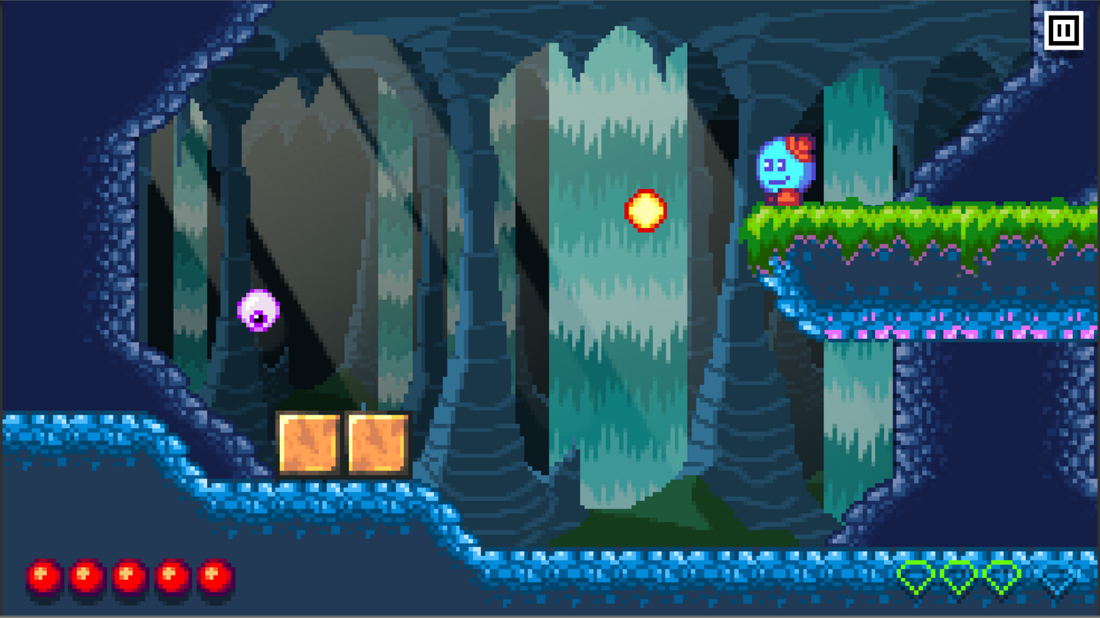
In Witcheye, I'm not shooting for Spelunky-level difficulty. A few savants aside, most people found Satellina pretty hard, so for a follow-up, I wanted to make something breezy and fun; still hard enough to be satisfying, but generally more of a romp than a gauntlet. (Beating the game on normal difficulty will unlock a harder mode where I'll really break out the hammer and tongs, if that's your thing.)
The reference point I'm looking towards on this score and many others is Super Mario Bros. 3. That stone classic is actually pretty tough, but people don't seem to remember it that way; when gamers are talking over the "Nintendo-hard" games of yesteryear, it rarely comes up. Part of that is that the difficulty of SMB3 is so exquisitely tuned, but I think another big part of it has to do with tempo: SMB3's levels are generally very short, and 1UPs are abundant, so you rarely get sent back to the beginning of the world to redo parts you've already mastered. Pacing-wise, it's not so far off from Super Meat Boy. It feels very more-ish.
The reference point I'm looking towards on this score and many others is Super Mario Bros. 3. That stone classic is actually pretty tough, but people don't seem to remember it that way; when gamers are talking over the "Nintendo-hard" games of yesteryear, it rarely comes up. Part of that is that the difficulty of SMB3 is so exquisitely tuned, but I think another big part of it has to do with tempo: SMB3's levels are generally very short, and 1UPs are abundant, so you rarely get sent back to the beginning of the world to redo parts you've already mastered. Pacing-wise, it's not so far off from Super Meat Boy. It feels very more-ish.
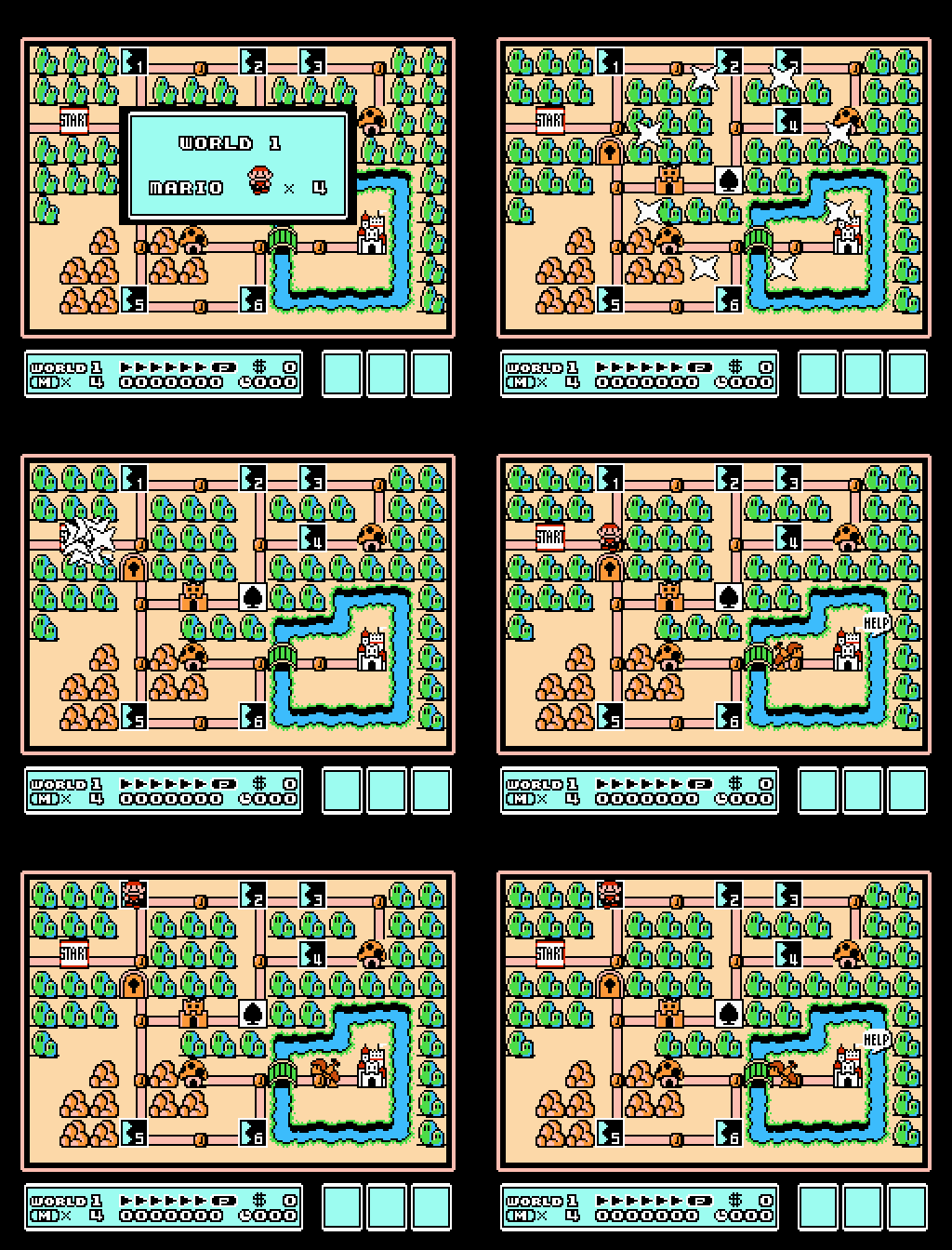
(Of course, SMB3 also just feels right in about a hundred other ways. One that I've also had in mind while designing Witcheye is just how much stuff it throws at you--so many memorable little touches in that game. More on that later.)
I'm keeping levels quite short in Witcheye, and restarting is instant; there are no lives, so you don't have to stress about your longevity.
2) Work discreetly on the player's behalf.
I've already gone on for a bit as usual (now who's the filibustering owl?) so I'll keep the second point shorter: the player should always feel like failure was their own fault. Tie goes to the runner.
Now, this can be overdone: you don't want it to feel like the game's on autopilot (again, looking at you, '90s-'00s Zeldas); you don't want to separate them from the physical experience of being in the game. And you don't want them to feel condescended to, or you'll rob them of the satisfaction they're working sincerely to earn.
But when something's close, if you quietly break a tie on the player's behalf, they'll get the thrill of cheating death--what could be better? In Satellina, you're trying to avoid red particles and collect green particles. You'd never know this as a player, but the green particles have hitboxes that are slightly larger than the particle graphics themselves. The red ones? Slightly smaller. That means that maybe 5% of the time that you'd crash into a deadly red particle--or whiff on an attempt to collect a juicy green particle--I give you the benefit of the doubt. It's (hopefully) imperceptible, but it makes the game just a little bit kinder, without lowering the perceived challenge, since the two kinds of particles are still very much there, very much tangible, and very much something you need to stay spatially aware of. Witcheye gets up to some of the same tricks; I'll explore them in more detail in a later post about boss design.
Thanks for reading!
I'm keeping levels quite short in Witcheye, and restarting is instant; there are no lives, so you don't have to stress about your longevity.
2) Work discreetly on the player's behalf.
I've already gone on for a bit as usual (now who's the filibustering owl?) so I'll keep the second point shorter: the player should always feel like failure was their own fault. Tie goes to the runner.
Now, this can be overdone: you don't want it to feel like the game's on autopilot (again, looking at you, '90s-'00s Zeldas); you don't want to separate them from the physical experience of being in the game. And you don't want them to feel condescended to, or you'll rob them of the satisfaction they're working sincerely to earn.
But when something's close, if you quietly break a tie on the player's behalf, they'll get the thrill of cheating death--what could be better? In Satellina, you're trying to avoid red particles and collect green particles. You'd never know this as a player, but the green particles have hitboxes that are slightly larger than the particle graphics themselves. The red ones? Slightly smaller. That means that maybe 5% of the time that you'd crash into a deadly red particle--or whiff on an attempt to collect a juicy green particle--I give you the benefit of the doubt. It's (hopefully) imperceptible, but it makes the game just a little bit kinder, without lowering the perceived challenge, since the two kinds of particles are still very much there, very much tangible, and very much something you need to stay spatially aware of. Witcheye gets up to some of the same tricks; I'll explore them in more detail in a later post about boss design.
Thanks for reading!

Ah, satisfaction


 RSS Feed
